
When a child’s autism is subtle, the decision to pursue an ASD Level 1 diagnosis is rarely simple. A child may be verbal, socially interested, bright, and coping well enough on the surface. In that situation, many families hesitate, not because they are careless, but because they are thinking seriously about what a diagnosis might change.
ASD stands for autism spectrum disorder. Level 1, sometimes informally described as mild autism, is the support level described as requiring support, even when a child’s differences may look relatively subtle from the outside.
Clinically, autism is identified through differences in social communication and interaction, alongside restricted or repetitive patterns of behaviour or interests that affect everyday functioning.
I understand that hesitation. I had many of the same concerns myself. What I want to do here is lay them out honestly, and then explain why I still came to believe that getting the diagnosis was the better decision.
I have written separately about why diagnosing Autism Level 1 in small children can be so difficult, particularly when the signs are subtle or uneven.
Why Families Hesitate
The fears that make parents pause before seeking an ASD Level 1 diagnosis or formal autism assessment are not imaginary.
The label concern
ASD Level 1 is probably the part of the spectrum most likely to be questioned from the outside. Because the child may look capable, verbal, and socially present in many situations, families sometimes wonder whether making the diagnosis official will create a problem that does not yet seem visible.
This is also why the phrase “mild autism” can be misleading. A child’s difficulties may look mild from the outside while still creating meaningful support needs in daily life.
The fear is that the label will follow the child into school records, professional assessments, and later adult life, and that people will read it too broadly. That concern is understandable, because stigma and discrimination around an autism diagnosis have not disappeared. Diagnostic categories are often handled less carefully by systems than by families who actually know the child.
A child can be intellectually capable and socially motivated and still be significantly affected by autism. That unevenness can also extend into learning, even when intellectual ability is average or above average. But if they do not fit the stereotype other people expect, the diagnosis can be misunderstood in both directions: either minimized or treated as if it defines everything.
The privacy argument
Some parents decide not to pursue an ASD Level 1 diagnosis, at least not formally, because they hope the child’s difficulties can be managed quietly. If the child is coping, they reason, why introduce a category that may complicate things?
At Level 1, this argument can feel especially persuasive because the presentation is often uneven. A child may look fine in one setting and struggle badly in another, which can make their support needs easy to underestimate. The problem is that the privacy approach works best when the environment is already structured, supportive, and forgiving. It becomes harder to sustain as demands increase and that scaffolding starts to disappear.
Practical barriers
Families have also had practical reasons to view diagnosis cautiously. In Sweden, for example, autism and ADHD used to trigger special medical review in the driving licence process, including a requirement for a doctor’s certificate. That changed on 15 January 2026, when Transportstyrelsen removed those diagnosis-based medical requirements, meaning autism and ADHD no longer in themselves trigger that review for a licence permit application.
That specific barrier is gone now. But the fact that it existed until very recently helps explain why some families have seen formal diagnosis not only as access to support, but also as possible friction with systems that do not always handle neurodivergence with much nuance.
Fear that the label replaces the person
There is also a quieter fear, and I think it matters. Once a diagnosis exists, other people may stop seeing the child clearly and start seeing the category instead.
A teacher may interpret ordinary behaviour through the diagnosis in ways that are not fair. A professional who is not well informed may use autism to explain things it does not explain, or lower expectations where thoughtful support would have been the better response.
Those risks are real. But they are not arguments against diagnosis itself. They are arguments for careful disclosure, good professionals, and active parental involvement in how the child is understood.
Why an ASD Level 1 Diagnosis Still Matters
For me, the central point is this: not naming the profile does not make it disappear.
The child still has the same sensory sensitivities, the same social processing style, the same executive functioning pattern, and the same internal cost. Avoiding diagnosis does not remove those realities. It mainly removes clarity.
And when there is no clear explanation, people tend to fill the gap with the wrong ones. The child gets seen as difficult, rigid, immature, oversensitive, uncooperative, or lazy. Those misunderstandings do not protect the child. They just allow the real difficulty to stay misunderstood for longer.
A formal assessment can also help clarify whether autism is the best explanation for the child’s difficulties, whether another condition may be involved, or whether more than one thing is contributing.
Support usually depends on recognition
This is one of the most practical reasons an ASD Level 1 diagnosis matters. Formal systems are not especially good at responding to need that is obvious to a family but undocumented on paper. Information about support after diagnosis commonly includes education, work, social care, and benefits, which shows how often formal recognition is tied to access.
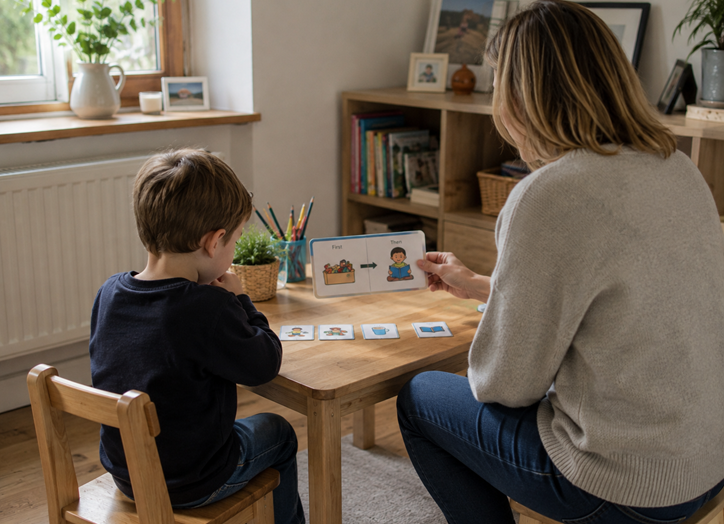
That does not mean a diagnosis solves everything. A diagnosis is not always required for a child to receive help, but a diagnostic report can make their needs easier to document when asking for school accommodations or specialist support. It does mean that without one, a child whose needs are real but subtle can be left in a grey zone where they are struggling too much to thrive, but appearing capable enough to be denied help.

Self-understanding matters more than people think
Diagnosis also affects what the child, and later the adult, can understand about themselves. Research on late-diagnosed autistic adults describes diagnosis as giving an explanation for long-standing difficulties, supporting self-acceptance, and helping people develop coping strategies after years of missed or misunderstood struggles.
That matters because undiagnosed people often do not just struggle. They struggle without a map. If the same kinds of situations keep overwhelming them, and nobody can explain why, they may start interpreting those experiences as personal failure. A more accurate framework does not erase difficulty, but it can replace shame with understanding. That understanding can also make self-advocacy easier, because the child eventually has clearer language for describing what they need and why.
The employment question
This is where the conversation becomes more serious in a long-term sense.
One of the most persistent assumptions about ASD Level 1 is that if the person is intelligent, verbal, and academically capable, adult life will probably work out reasonably well. Research does not support that assumption.
A German study of adults with ASD without intellectual disability found an unemployment rate of 25.2 percent, compared with 5.2 percent in the general population, despite above-average education levels in the autistic group. The same study found that periods of unwanted unemployment lasted on average 23 months, and concluded that higher education did not protect against unemployment risk, likely because autism-specific interpersonal difficulties still created major barriers.
That finding matters because it pushes back against a very common misunderstanding. The issue is not simply intelligence, motivation, or effort. A person can be bright, educated, and genuinely capable, yet still struggle to get into work, stay in work, or function sustainably in workplaces shaped around unwritten social rules.
A 2025 scoping review reinforced that picture, finding multiple individual and environmental barriers affecting both access to employment and job retention for autistic people without intellectual disability. The point is important: the obstacles are not just “inside the person.” They also exist in the workplace, in recruitment, in expectations, and in systems that reward social fluency more than actual competence.
An earlier study found something else worth noticing: participants who disclosed their ASD diagnosis to their employer were more than three times as likely to be employed as those who did not disclose. That does not mean disclosure is always easy or safe in every setting, but it does challenge the assumption that hiding autism is automatically the better long-term strategy. A formal diagnosis can also support requests for workplace accommodations when those are needed. a formal diagnosis can also make early intervention easier to access, particularly when support depends on documented needs.
For me, this is also where early intervention matters. Recognition gives you a clearer basis for deciding what needs active support while the child is still young, rather than waiting for a difficulty to become much harder to address later.
Where I land
I do not think diagnosis is emotionally neutral. I do not think every professional handles it well, and I do not think every institution responds wisely. Some people will flatten the picture. Some systems will use the category lazily. Some environments really will lower expectations instead of offering the right support.
But after thinking through the alternatives, I still come back to the same conclusion.
The risks of non-diagnosis are often less visible at first, but they can be more damaging over time. A child may look spared in the short term because nothing has been made official. But later that same child may enter adolescence or adulthood without the tools to understand their own profile, without access to support that depends on documentation, and without the self-knowledge needed to build a sustainable way of living and working.
For me, that is the deciding point. I would rather work from reality than from ambiguity. I would rather name the profile clearly, understand the actual strengths and limits, and build skills and support from an honest starting point. That may feel heavier at first, but in the long run I think it offers a better foundation.
Sources
Sources for this post are included below for readers who want to explore further.
- Kirchner, J.C., and colleagues. 2022. “Alarmingly Large Unemployment Gap Despite Above-Average Education in Adults with ASD Without Intellectual Disability in Germany: A Cross-Sectional Study.” Journal of Autism and Developmental Disorders.
- Scott, Michael, and colleagues. 2017. “Predictors of Employment Status Among Adults with Autism Spectrum Disorder.” Work.
- Dubreucq, Julie, and colleagues. 2025. “Barriers and Facilitators to Achieving Employment in Mainstream Settings in Adults with Autism Spectrum Disorder Without Intellectual Developmental Disorders: A Scoping Review.” L’Encéphale.
- National Autistic Society. “Formal Support Following an Autism Diagnosis.”
- Transportstyrelsen. 2025. “Enklare för personer med adhd att få körkortstillstånd.”
- Transportstyrelsen. 2026. “Medicinska krav.”
- Lilley, Rozanna, and colleagues. 2022. “A Way to Be Me: Autobiographical Reflections of Autistic Adults Diagnosed in Mid-to-Late Adulthood.” Autism.
- Olivier, Johané, and colleagues. 2022. “Late Diagnosis of Autism: Exploring Experiences of Males Diagnosed With Autism in Adulthood.” Current Psychology.