
The question of a second child after autism diagnosis is rarely simple. It can become particularly difficult to think about clearly because it sits at the intersection of recurrence risk, family capacity, and the often invisible work of raising a child whose needs may look mild from the outside, as is often the case in Autism Level 1, while being substantial in practice.
This is not the post in which I explain why we first decided to stop at one child. I already wrote about why we originally decided to stop at one child in detail, back when autism wasn’t yet part of the picture. In our case, the original decision had little to do with autism, because autism was not yet suspected. This post is about something narrower: what I found when I later looked at the family-planning question again, first when autism had started to become a possibility, and later when it was properly confirmed.
What changes in this context
When people talk about autism in a milder or subtler presentation, they often speak as if the main issue is social difficulty. That can be part of the picture, but it is not always the most useful way to understand what is going on.
In some children, what later becomes visible socially is at least partly downstream of something else: an uneven developmental profile, differences in processing, comprehension, working memory, flexibility, pace, or language-heavy learning that may coexist with normal or high intelligence. I look more closely at how Autism Level 1 can affect learning in a separate post. Research on autism without intellectual disability supports that broader picture and shows executive-function difficulties even when IQ is in the normal range.
That matters because it changes what the daily work actually is. A child may be warm, affectionate, and clearly interested in other people, yet still need sustained help to keep up with learning demands, transitions, regulation, group situations, and the general pace of environments designed around neurotypical development. The load is not always dramatic from the outside. Often it is simply continuous.
My own view is that a child like this should be set up for success in the world as it is. That does not mean trying to erase what is autistic about them, and it does not mean lowering expectations too quickly. It means helping them build the skills they will need to navigate that world, while adjusting expectations only where their actual limits genuinely require it.
What this can require from a family is not always obvious from the diagnosis itself. Autism Level 1 may sound reassuring compared with presentations involving greater support needs, particularly when the child has normal or high intelligence. But intellectual ability does not necessarily tell you how much active teaching, repetition, supervision, or adaptation will be needed in everyday life.
Some skills may develop almost effortlessly, while others require much more deliberate work. A child may understand something in one setting but struggle to apply it somewhere else. They may need concepts explained differently, routines practised repeatedly, or more time before certain kinds of learning become comfortable. None of this means that every autistic child will need the same level of parental involvement. The variation is enormous. But it does mean that a relatively mild diagnostic label should not automatically be translated into a light practical workload.
This became important to how I thought about family capacity. Time spent helping one child develop a skill is time that cannot simultaneously be given somewhere else. The same is true of attention, patience, planning, and the mental effort involved in constantly working out what the child needs next.
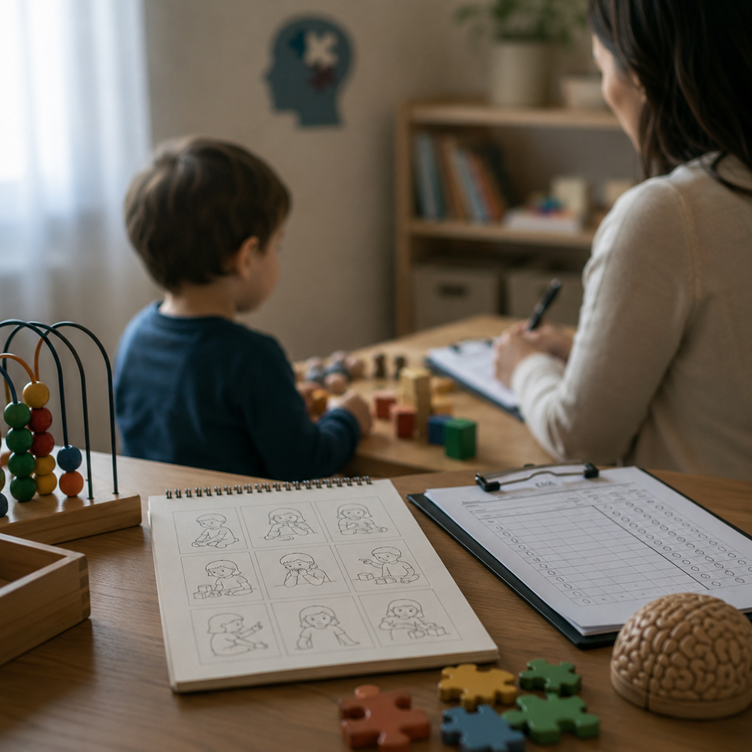
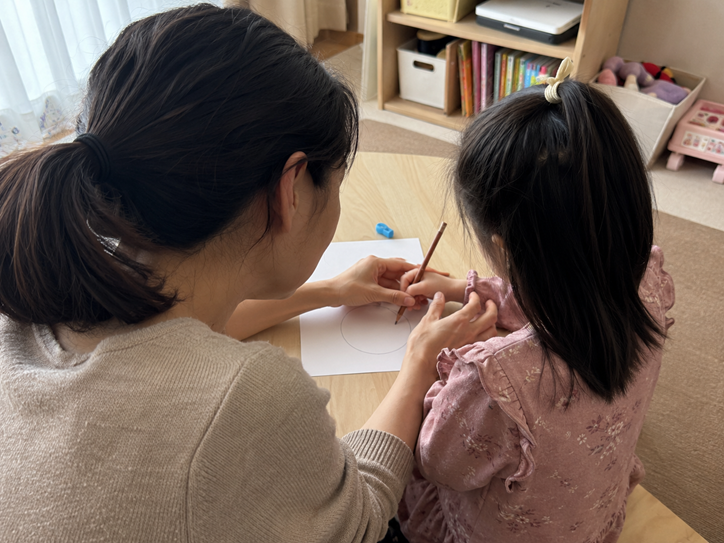
Early intervention was part of that calculation too. In our family, it has meant not only professional support, but the everyday work of noticing gaps, teaching skills deliberately, practicing them repeatedly, and changing the approach when something does not generalise. None of those individual moments necessarily looks enormous, but together they require real time and attention.
For some families, adding another child may still be entirely manageable. For others, the existing developmental work may already use much of the capacity they realistically have. That is not a judgement about what anyone ought to choose. It is simply part of the calculation.
A Second Child After Autism Diagnosis: What Sibling Recurrence Research Says
The most widely cited recent estimate is that younger siblings of autistic children have about a 20.2% chance of also being autistic. That figure comes from updated Baby Siblings Research Consortium data published in 2024, and the same research reported higher recurrence in some subgroups, including male younger siblings and families with more than one older autistic child.
That number matters, but it has to be handled carefully. It is a population-level estimate, not a personalised forecast for one family, and it does not tell you what your own probability is if one or both parents may have unassessed autistic traits. It supports taking recurrence risk seriously, but not pretending that a general figure can become an exact private prediction.
Genetic counseling can sometimes make that discussion more individual, particularly if genetic testing has identified a specific genetic cause. When no specific cause is known, recurrence counseling still relies largely on group-level estimates rather than a precise prediction for one family.
This is also where caution is especially necessary if the first child’s presentation is subtle. I have not found strong evidence giving a reliable recurrence percentage specifically for families whose first child has DSM-5 Autism Level 1 rather than autism more broadly. So the honest position is to resist more precision than the research can really support.
It is also worth remembering that some children in high-risk sibling studies are recognised later than age three, which is one reason recurrence figures can vary depending on how long children are followed. One 2024 follow-up study reported higher recurrence by mid-childhood than earlier toddler-based estimates, while also noting important limits to generalisability.
What it clarified for me
By the time autism had started to come into view, I had already assessed what a second child without known additional risk might mean for our family. I had already more or less concluded that one child was the realistic limit.
So the question of a second child after autism diagnosis did not create a completely new decision for me. The autism-related research changed the texture of the doubt. It made the question less abstract and less easy to romanticise.
It became less about whether a larger family might be lovely in principle, and more about whether I was willing to enlarge it while already carrying the sustained developmental work that this kind of autistic profile can involve, and while knowing there was a meaningfully higher chance of having another child with autism.
That was the point at which the remaining temptation lost much of its force. Not because every family in this position should conclude the same thing, and not because a statistic can decide a family’s future on its own, but because the research made it harder to pretend that the added uncertainty was trivial.
The more useful question
The most useful question I found was not “Do I want another child?” It was “What can this family sustainably carry?” That capacity is not just about personal stamina. It also depends on the support network around the family and how much practical help is actually available. For me, thinking about a second child after autism diagnosis made that question much more concrete.
That question became sharper once autism was first suspected and then confirmed. Parents of autistic preschoolers are already known to face lower well-being and greater mental health strain on average, and wider research suggests that supporting parents matters precisely because the demands can be substantial in this period.
A sibling is not a developmental intervention. They are another child with their own needs, uncertainties, and claims on the family’s time and attention.
For me, that was the closing layer. Health and support had already brought me most of the way to the decision to stop at one child, but reconsidering a second child after autism diagnosis added another layer to that decision. Later, when autism moved from suspicion to confirmation and I looked more closely at the research, it closed the question again at the moments when I was tempted to reopen it.
Sources
Sources for this post are included below for readers who want to explore further.
- Ozonoff, Sally, et al. 2024. “Familial Recurrence of Autism: Updates From the Baby Siblings Research Consortium.” Autism Science Foundation
- Anderer, Sarah. 2024. “One in 5 Children Have Autism If Older Sibling Does Too.” JAMA.
- Bazelmans, Tessel, et al. 2024. “Mid-childhood Autism Sibling Recurrence in Infants With a Family History of Autism.” Autism Research, Pub Med
- Green, Cherie C., et al. 2024. “Predictors of Change in Wellbeing and Mental Health of Parents of Autistic Pre-Schoolers.” Journal of Autism and Developmental Disorders.