Raising an only child was never something I approached as a list of advantages and disadvantages. But once it became our family reality, I found myself wondering about many of the things people casually say about only children: that they are spoiled, lonely, less able to share, or somehow missing an important part of childhood.
When my son was very small, I began to question whether growing up without a sibling could have real negative effects in the long run. I started reading, not because I was looking for alarm, but because I wanted to know what the evidence actually said so I could make more informed decisions as a parent.
What I found was reassuring in some ways and thought-provoking in others. The dramatic stereotypes about only children do not hold up particularly well, which was a relief, but some of the more specific questions felt worth sitting with. I was not looking for a formula and I did not come away with one. What I came away with was a clearer sense of what might be worth noticing, and that shaped some of the choices I made.
What Research Says About Raising an Only Child
The broad picture is much calmer than the old clichés would have you believe. The old idea of an “only child syndrome” does not hold up particularly well. Research does not support the familiar idea that only children are naturally selfish, lonely, or maladjusted.
At the same time, that does not mean every experience is identical. Some parts of childhood may simply look a bit different when there is no sibling in the house, and that seemed to me like a more useful way to think about the issue than asking whether only children are fine or not fine as a category.
Fewer opportunities to practise conflict and negotiation
This was one of the first things I kept coming back to. Siblings give each other constant, unavoidable experience in frustration, compromise, waiting, disagreement, and making room for another child’s needs. An only child can obviously learn all of that too, but more of that practice may need to happen outside the home.
I did not take that as a dramatic warning, or as evidence that only children have poorer social skills. It felt more like a practical point. If some of the messier parts of learning to live with other people are not happening naturally at home, then it makes sense that they may need to happen elsewhere.
The weight of concentrated parental attention
Another thing I found myself thinking about was what it means to receive the full force of parental attention all the time. With one child, all your hopes, worries, observations, and expectations can gather around one person very easily.
That does not automatically become pressure, of course. But it did make me more aware of how easily love, concern, and attentiveness can slide into intensity when there is no one else diffusing that focus.
A smaller built-in family network over time
One of the more concrete findings I came across was about family sociability in adulthood. A large U.S. study found that adults who grew up without siblings socialised with relatives somewhat less often than those who had siblings, while the differences in friendships and broader social life were much smaller.
I did not read that as proof of social disadvantage. I read it more as a reminder that family connection may need a bit more intention when it does not arise through siblings and the wider family web that often comes with them.
Less daily practice in sharing and dividing resources
The research on sharing and prosocial behaviour also stayed with me, though in a general rather than prescriptive way. Some studies suggest that children often become more generous when prosocial behaviour is experienced as chosen rather than simply instructed, and that repeated social experience matters a great deal in how those habits develop.
That did not tell me exactly what to do, but it sharpened my attention to the small daily moments in which fairness, waiting, turn-taking, and consideration are learned.
A slight lean toward solitary activity
This was the point I held most lightly, because the evidence here feels less firm and less universal. Still, it did seem possible to me that a child who spends a lot of time happily in the company of adults, or alone, may simply feel more at ease in solitary activity than in the push and pull of group dynamics.
Again, I did not read that as a problem in itself. Being comfortable alone can be a strength, and it can support independence. I just thought it was worth noticing that comfort with solitude does not automatically build comfort with peer life, and sometimes the second needs its own opportunities.
What I actually do about it
None of this left me feeling alarmed. If anything, it made me calmer. Our decision to stop at one child had already been shaped by our own circumstances, but the research made me feel that in a one-child family it was worth being a little more deliberate, not because something was wrong, but because some experiences might need a bit more room to happen. That was really the shift for me. I wanted to be deliberate about the areas that seemed easiest to overlook, and to handle them in ways that felt realistic in our life.
Starting kindergarten early, and adjusting what I expected from it
Where I live, children can start kindergarten very early. I looked into the question of timing and did not find any clear, settled answer about the ideal age. That mattered to me because it meant I was not choosing between a proven right answer and a proven wrong one. I was making a judgment call, as most parents eventually do.
I decided to start on the earlier side. Not because I believed early kindergarten was inherently better, but because I felt regular time around other children mattered more in our situation than it might in a household where sibling interaction was already built into everyday life. That was simply my reading of our circumstances.
What made the decision easier was changing what I expected kindergarten to provide. I stopped thinking of it as something that needed to be perfect, especially educational, or stimulating in some idealised way. As long as he was safe, reasonably settled, and regularly around other children, that felt meaningful enough. The things I hoped he would get from it were not advanced lessons or extraordinary enrichment, but the ordinary social business of being around peers, sharing space, waiting, adapting, and finding his place among other children.
And once he settled, I could see that something was happening there that we simply could not recreate at home. He watched other children, copied them, responded to them, adjusted to them. It was a different kind of learning from anything that happened with us, and that made the decision feel worthwhile.
Not turning attention into pressure
This was one of the areas where I noticed myself more than I noticed him. With one child, it is easy to watch too closely and start feeling that every milestone needs attention, every skill needs support, and every small delay needs intervention.
I decided quite consciously that I did not want to parent like that. I was not going to push flash cards just so he could point early or seem ahead of the curve. I did not want my love and attention to turn into a constant project of hurrying him along.
That did not mean becoming passive. It just meant that when I thought he needed support in something, I tried to change the approach rather than increase the pressure. I was more interested in making room for development than in forcing performance.
Building family connection deliberately, across distance
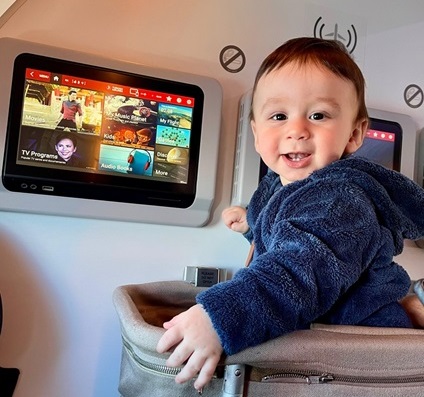
My family is spread across different parts of the world, so the wider family network my son grows up with does not happen naturally through proximity. If I want those people to feel familiar and emotionally real to him, that has to be built more deliberately.
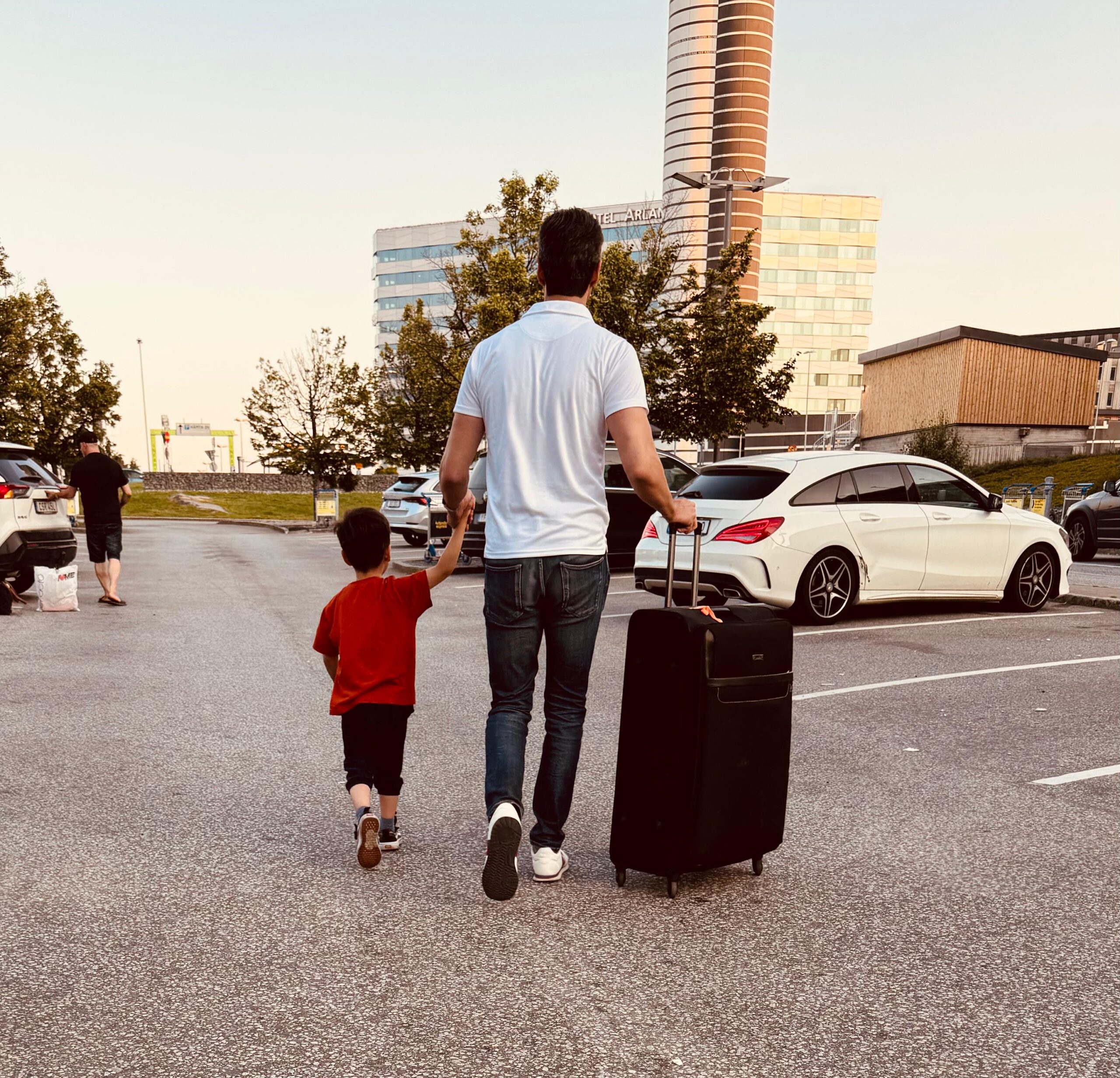
That is one reason family visits matter so much to me. I try to think of them less as an occasional luxury and more as part of the kind of childhood I want him to have. Time with cousins, grandparents, aunts, and uncles gives him something that feels important, the sense of belonging to a wider circle and not only to our small daily unit.
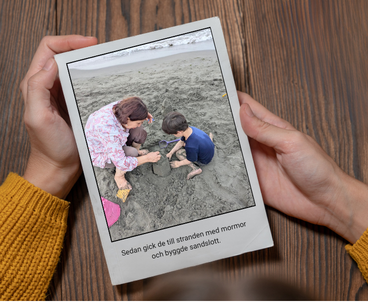
In between visits, I make albums with photographs and small stories attached to them. Who this person is, what they are like, something we did together, a detail that makes them vivid. It is simple, but it helps keep people present in his mind instead of letting them fade into the category of distant relatives he only vaguely recognises.
Modelling sharing rather than just encouraging it
This is one of the places where small things have mattered more to me than big ideas. With something as ordinary as blueberries, I divide them into two portions before we sit down, one for him and one for me, and we eat side by side. If he wants one of mine, I may give him one, but I keep the rest for myself.
I like that example because it makes the point without turning it into a lesson. It quietly shows that each person has their share and that both shares matter. No speech, no correction-heavy moment, just a repeated picture of fairness in practice.
The same thing applies in play. I do not always let him lead everything entirely on his terms. Sometimes I take a turn, sometimes I build in a little waiting, sometimes one toy has to pause while another has a go. None of this is a grand method. It is just a way of letting everyday life include some of the social friction and adjustment that might otherwise happen more naturally between siblings.
Creating natural opportunities for group play
At the same time, I never wanted to become too strategic about any of this. I did not want to spend my time trying to manufacture perfect social scenarios because of a fear that only-child life was missing something essential. That seemed like a good way to make parenting feel stiff and anxious.
So while I value playdates and organised opportunities, I pay just as much attention to ordinary moments that arise on their own. A park, a sandpit, a queue for the slide, cousins together at a family gathering, those situations often feel more natural and more useful than anything too carefully constructed. They also happen more often than you think once you start noticing them.
Where I land now
What research gave me was not a set of instructions. It gave me a calmer lens through which to think about raising an only child. It helped me separate evidence from stereotype, and once that noise dropped away, the question became much simpler: what kinds of experiences do I want to make room for in my son’s life?
The choices I made are not presented here as best practice or as the right answer for everyone. They are simply the choices that felt sensible to me after reading, thinking, and paying attention to the child in front of me. That, in the end, is probably the most honest description of intentional parenting I can give.
Sources
Sources for this post are included below for readers who want to explore further.
- Falbo, Toni, and Denise F. Polit. 1986. “Quantitative Review of the Only Child Literature: Research Evidence and Theory Development.” Psychological Bulletin.
- Trent, Katherine, and Glenna Spitze. 2011. “Growing Up Without Siblings and Adult Sociability Behaviors.” Journal of Family Issues.
- Chernyak, Nadia, and Tamar Kushnir. 2013. “Giving Preschoolers Choice Increases Sharing Behavior.” Psychological Science.
- Dufner, Michael, Mitja D. Back, Franz F. Oehme, and Stefan C. Schmukle. 2020. “The End of a Stereotype: Only Children Are Not More Narcissistic Than People With Siblings.” Social Psychological and Personality Science.
- American Psychological Association. 2024. “Only Children Are Often Misunderstood. Take a Closer Look at the Science.”
- BBC Worklife. 2022. “Why Only Children Are Still Stereotyped as Selfish and Spoilt.